
Chips with everything
What is RCW?

I’ll explain the problem we were faced with. We coppice. We do it for fuel, for useful sticks and as wildlife habitat management. After selecting the firewood and useful plant supports there is a lot of material left, some of it gets stacked as deadwood habitat and we only need so many pea-sticks. What to do with mountains of twiggery? We didn’t want to burn it for reasons of nuisance, practicality and CO2 release. Stacking and leaving is known to cause a build up of Nitrogen in the soil and colonisation by Nettles that can persist for a very long time.
I have had a wood chipper for ages. Not a very mobile one and rather picky about what materials it enjoyed devouring. It hated Willow and the feed chute was too small to accommodate anything other than neat and tidy branches - anything a bit random was a no-no. However the output from the chipper was very useful.
On Youtube I saw a video of an Eliet Chipper - it had a big chute and produced fine chips from material of a size that was just right to deal with our surplus. By chance at the same time I happened across a video describing Ramial wood chips and the qualities that make them different from your usual ‘tree surgeon chips’. The short form for Ramial Wood Chip is RCW (Ramial Chipped Wood). The French call it Bois Rameal Fragmente (BRF)
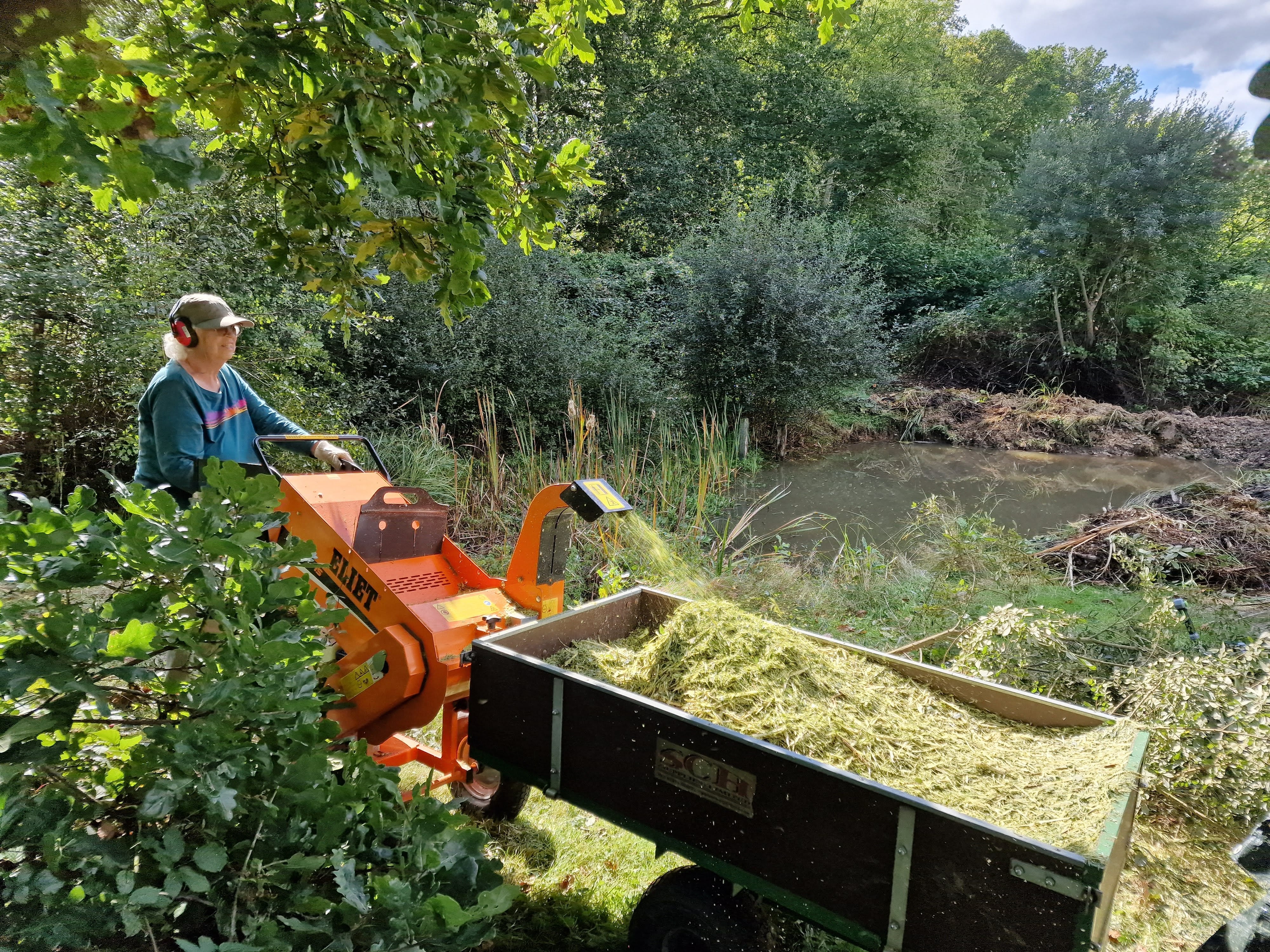
RCW is made from green wood branches less than about 2” diameter and consequently includes a higher proportion of bark, buds and leaves than regular wood chip. This means the percentage of Nitrogen is significantly higher than in chips from large trunks and branches. Take a look at my piece called ‘Ramifications’ to see the origin of the word Ramial.
We bought an Eliet chipper. It runs on petrol but is very frugal with fuel. Since our purchase Eliet has released a battery powered chipper that works on the same principle. I’ll do a review of the Eliet machine sometime - it will be a bit dull unless you like machines - enough of that.
After a Winter season of chipping we had about three cubic metres of Ramial chips. Unlike the wood chips we had seen before, these chips were smaller, rougher and included more fine material. It was striking just how quickly the heaped material warmed up and became infiltrated with fungal hyphae - in short it rotted very quickly. Not the kind of chip you’d use for a permanent path.
Some online investigation revealed that RCW is considered useful for soil improvement as the nitrogen level is high enough to dodge the lock-up that ordinary wood chip can cause. I have been trying out our RCW as a mulch on all kinds of crops with good success and once the crop has been harvested I have incorporated the RCW into the soil. I have used it as short term paths between crops that get picked frequently like peas to avoid compaction, it worked. We don’t use a bed system and we are not no-dig. Our new Apple trees have been heavily mulched with RCW to control weeds, add nutrients and perhaps reduce Apple scab, one of the claims made by some in favour of RCW.
Our biggest hope is that we might be able to produce potting compost from our RCW. Ian Tolhurst has had success with composted wood chip as a growing medium so we thought it worth trying. One of our bins of RCW was earmarked for potting compost production and after 6 months of heating and rotting I turned (to mix it) it which initiated another period of heating. Ian Tolhurst starts to use his material after two years composting, we felt that using RCW the material might be useable after a year.
In early February I sieved some composted RCW to see what the potential potting compost would look like. It looked good, woody, yes but a good feel and smell. I sowed some old seeds as a test into the sieved compost and was thrilled to get good germination and sustained growth. I did cheat, I added controlled release fertiliser to the RCW potting compost. I don’t feel too bad about using synthetic nutrients as they help avoid issues such as animal welfare and aminopyralid contamination, what’s more they can be made using hydro power and my main objective at this stage is to avoid using peat.
My test results were at least as good as I have been having with peat free compost. The only problem is the time and effort needed to sieve the material to a fineness OK for seeds and seedlings….. so we found a machine to do it for us. More of that to follow.